News & Events
Stay updated to Dreamztech's news and annoucements, and follow us to stay ahead on the courses and events that we may have from time to time.


Stay updated to Dreamztech's news and annoucements, and follow us to stay ahead on the courses and events that we may have from time to time.

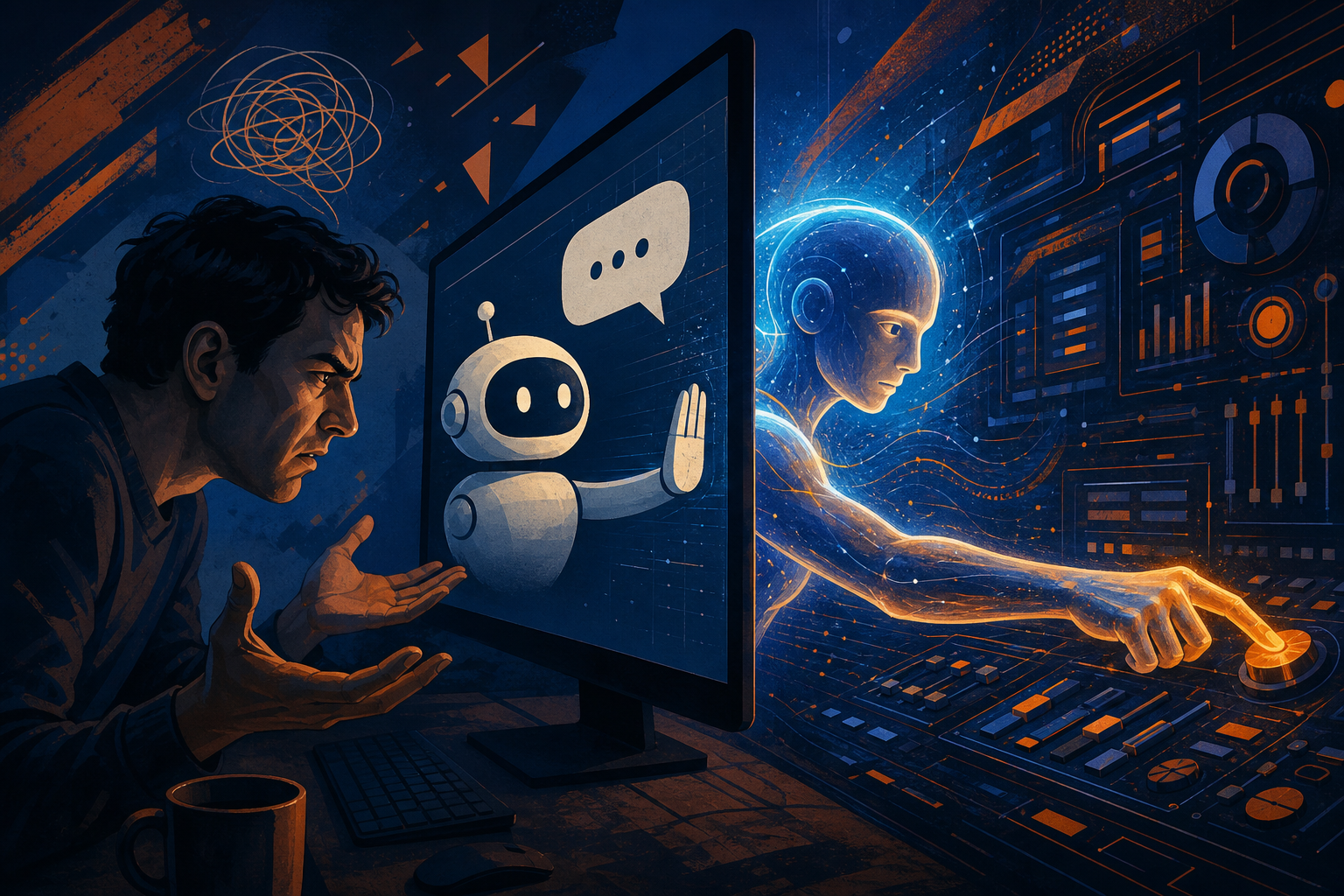
Most chatbots are impressive right up until you ask them to do something. They draft an email, explain a spreadsheet and then stop at the edge of the real work. ChatGPT Astra—also described as GPT-6 Astra—promises to cross that edge. The interesting question is not whether it can talk like a person. It is whether we should trust it to act like one of our coworkers.
Editorial note: ChatGPT Astra and GPT-6 Astra are discussed here as a forward-looking AI concept. This article does not claim that OpenAI has officially released a product by either name.
For years, the promise of AI assistants has been slightly misleading. We ask for a finished task, but receive a suggestion, a block of text or a list of instructions. The human still has to open the website, find the right screen, copy the information, check the result and press send. That is useful assistance, but it is not completion.
Astra’s proposed leap is computer use. Give the system a goal and it can work through the steps on a desktop: read a webpage, choose a menu, fill in a form, move between applications and react when the interface changes. In practical terms, it turns the AI from a commentator into an operator.
That distinction matters because most office work is not one big intellectual breakthrough. It is a chain of small actions. A person who asks for a weekly report usually does not want a paragraph about reports. They want someone to collect the numbers, check the spreadsheet, format the summary and prepare the email. An agent that handles the whole chain would feel less like a chatbot and more like a junior operator.
Computer use also exposes the weakness of the current AI experience. Language models can sound certain even when they are guessing. An autonomous agent can turn that same mistake into a wrong form submission, a misleading report or an email sent to the wrong customer. Astra therefore needs to show its work, ask when the stakes rise and make every important action reversible.

Traditional automation works beautifully when the world stays still. It follows a fixed route through a fixed system. The trouble begins when a website changes its layout, a customer leaves a field blank or a login session expires. The workflow does not adapt; it simply reports that step four failed.
A computer-use AI agent could respond more intelligently. It might recognise that a button moved, search for the new location and continue. It could notice that an invoice is missing a reference number and ask a person to resolve the exception. That flexibility is what makes the idea exciting—and what makes testing it properly so important.
Businesses exploring AI business solutions could use this kind of system for repetitive work such as sorting enquiries, comparing documents, updating customer records, preparing internal reports and routing requests to the right department. The appeal is not a flashy demonstration. It is getting ten small jobs finished before lunch without building ten separate software integrations.
Still, “fully autonomous” is the wrong ambition for many companies. The better design looks more like a careful colleague. Astra handles low-risk steps on its own, records what it did and stops for approval before sending money, deleting data, publishing content or contacting a customer.
That approach also changes how managers measure productivity. The question is no longer simply how many tasks the AI completes. It becomes: how often does it complete them correctly, how clearly does it report exceptions and how much time does a human spend checking its work?
Software development may be one of Astra’s most useful applications. Today’s coding assistants are good at generating functions, explaining errors and suggesting commands. Their weak spot is context. A real application contains years of decisions spread across configuration files, services, tests and undocumented assumptions.
A stronger coding agent could inspect a repository instead of treating every prompt as an isolated puzzle. It could trace how a feature works across files, identify likely failure points and suggest a change that fits the existing codebase. It could also explain why it chose one approach over another, which would make code review more efficient.
The important part is verification. Astra should reproduce a bug, run the relevant tests and show the exact files it changed. It should distinguish between “the patch looks plausible” and “the patch passed the checks I was able to run.” Those are not the same statement, and developers have learned the expensive way what happens when an AI blurs them.
Developers will probably welcome that discipline. Nobody needs another assistant that produces confident code and quietly leaves the debugging bill for someone else. The winning tool will be the one that saves attention, not just keystrokes.

Once an AI can operate a browser and touch business systems, safety stops being a footnote. Astra needs permission boundaries that match the real consequences of its actions, not a single checkbox labelled “autonomous mode.” Reading a public webpage is not the same as changing a bank detail, approving an expense or publishing an article.
The practical guardrails are easy to picture: sandboxed sessions, approval checkpoints, detailed activity logs, restricted credentials and a visible stop button. The system should explain what it plans to do before it does anything irreversible. When a user approves an action, the approval should apply to a clearly defined step—not silently authorise an entire chain of future decisions.
Prompt injection creates another problem. A webpage, document or email may contain instructions designed to manipulate the agent. Astra must treat outside content as data, not as a new boss. It needs to separate the user’s objective from instructions encountered during browsing, and it should pause when those instructions conflict.
Privacy matters just as much. A screen-reading agent may encounter passwords, customer details, financial information and private messages in the same afternoon. Users need control over what Astra can see, what it remembers and which systems it can access. Businesses will also need clear retention policies so that convenience does not quietly become permanent surveillance.
For companies already evaluating AI chatbot solutions, Astra will not remove the need for people; it will move the bottleneck. Instead of typing every instruction into every system, people will define the goal, set the boundaries and judge the result. That sounds liberating until you realise that supervision is still work—and bad supervision can scale mistakes.
Managers will need to design sensible approval points. If the system asks for permission after every click, nobody will use it. If it never asks for permission, a small misunderstanding can become a serious incident. The right balance depends on the task, the data involved and the cost of being wrong.
That is why AI literacy will matter more than prompt tricks. Teams will need to recognise uncertainty, design approval points and review an agent’s activity trail. The smartest user will not be the person who gives Astra the longest prompt, but the person who knows when not to let it continue.
The test for ChatGPT Astra is not a perfect product demo. It is a boring Tuesday: a website changes its layout, a document contains a typo, a permission expires and the user gives an incomplete instruction. Can Astra recover, explain the problem and avoid making a mess?
Reliability should be measured over many ordinary tasks, not one spectacular recording. Users should see failure rates, recovery behaviour, audit logs and examples of actions the system refused to take. A trustworthy product should make uncertainty visible instead of hiding it behind fluent language.
There is also a broader question about accountability. If an AI agent makes a mistake while using a company system, who owns the outcome? The answer cannot simply be “the model.” Organisations will need clear owners, escalation procedures and records that show what the agent saw, what it decided and who approved the final action.
ChatGPT Astra is an exciting idea, but excitement should not become a substitute for evidence. The future of computer-using AI will belong to systems that act decisively when the risk is low, slow down when the risk is high and tell people the truth about what happened.
If GPT-6 Astra can combine useful autonomy with honest limits, it could turn AI from a conversational novelty into a practical digital teammate. If it hides uncertainty behind polished language, it will simply automate our mistakes faster. That is the line the industry needs to watch—and the standard users should demand.
The capabilities and risks discussed here are grounded in existing research and guidance on computer-using AI, prompt injection and AI risk management:
Dreamztech (M) Berhad (1297765-M)
Website Design Johor Bahru, Web Design Company Johor Bahru
| Address | 64-01 & 64-02, Jalan Molek 2/2, Taman Molek, 81100, Johor Bahru, Johor, Malaysia. |
| Phone | +6011 3503 4944 |
| sales@dreamztech.com.my |