News & Events
Stay updated to Dreamztech's news and annoucements, and follow us to stay ahead on the courses and events that we may have from time to time.


Stay updated to Dreamztech's news and annoucements, and follow us to stay ahead on the courses and events that we may have from time to time.

The WhatsApp AI chatbot trend in 2026 is moving beyond basic automated replies.
Businesses are no longer using chatbots only to answer questions such as “What are your opening hours?” or “Where is my order?” The latest systems can understand customer requests, search business information, recommend products, check order details and pass complex conversations to human staff.
That shift matters because WhatsApp is already where many customers prefer to ask questions, compare options and request support. Instead of sending people to a form, email inbox or separate app, businesses can now build more of the customer journey directly inside a WhatsApp conversation.
For small and medium-sized businesses, the opportunity is clear: use AI to respond faster without making the customer experience feel robotic.
The WhatsApp AI chatbot trend refers to the growing use of artificial intelligence inside WhatsApp Business conversations for customer service, lead generation, sales and after-sales support.
Traditional chatbots usually follow fixed menus. AI chatbots work differently: they interpret natural language and identify customer intent even when a message is informal or incomplete. For example, a customer might ask for a package for three people next weekend. An AI chatbot can identify the likely product category, ask for the missing date, check available information and recommend the next step.
The most important development in 2026 is not simply that chatbots can “talk”. They are becoming connected to business systems. A useful chatbot should retrieve accurate information and take controlled actions, not merely generate a friendly answer.
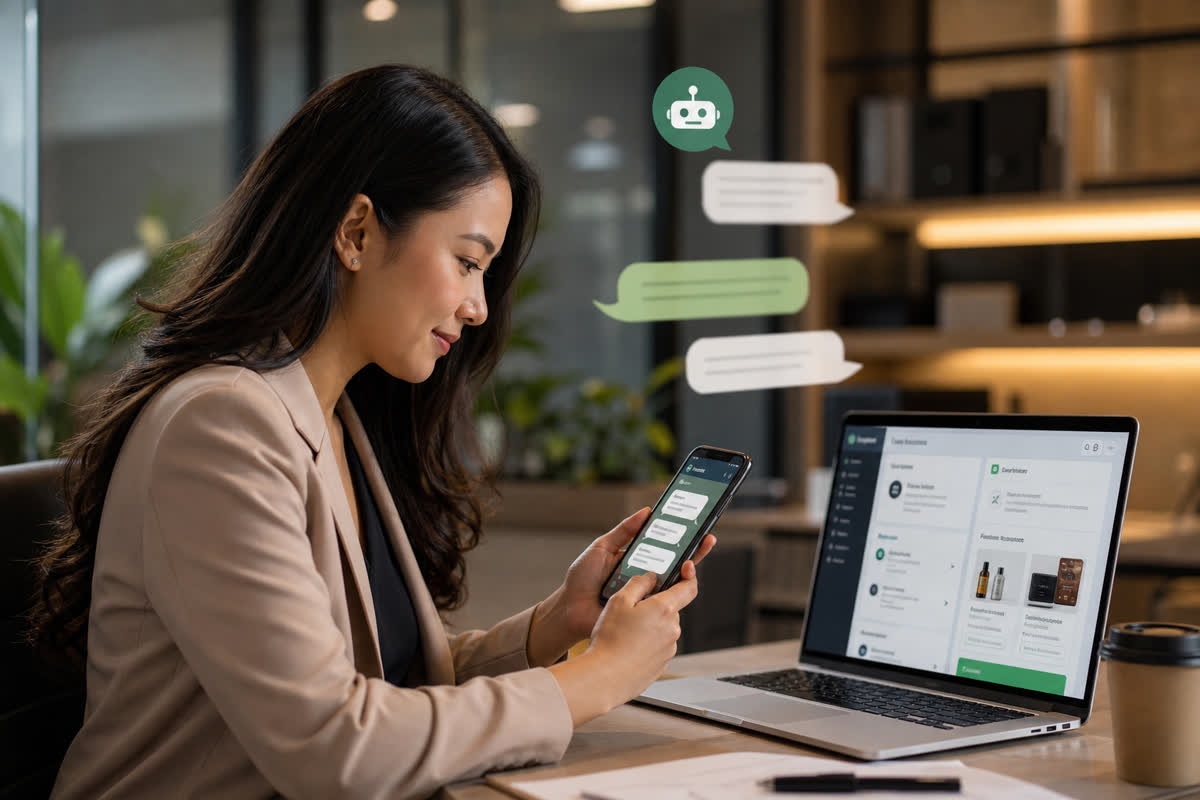
Many businesses begin with customer support, but sales is becoming one of the strongest use cases. A WhatsApp AI chatbot can qualify leads, ask about needs and budget, recommend suitable products, share catalogues, answer common objections, collect contact details, book consultations and notify a salesperson when a lead is ready.
A property business could ask about location, budget, property type and preferred viewing date. A beauty business could recommend a treatment and schedule an appointment. A training provider could identify the preferred course and send registration details.
The chatbot does not need to close every sale. Its job is to reduce delays and make sure promising enquiries do not get forgotten.
Customers are less tolerant of generic replies. In 2026, businesses are using AI to make WhatsApp conversations more relevant by considering previous questions, products viewed, preferred language, buying-journey stage, location and whether the customer is new or returning.
Personalisation should still have limits. Businesses need a clear reason to use customer data, and the chatbot should not make assumptions that feel intrusive. Remembering a customer’s delivery area can be useful; mentioning sensitive information the customer did not expect is not.

The strongest WhatsApp AI chatbot trend in 2026 is the move from standalone bots to connected AI agents. Meta’s WhatsApp Business Platform documentation describes AI-powered agents that can use business knowledge sources such as FAQs, product catalogues, files and websites, and connect to external systems through custom connectors.
A connected chatbot may check real-time order status, search a product database, confirm appointment availability, create or update a customer record, check delivery information, retrieve a quotation, start a support ticket or escalate a conversation to a human team member.
Businesses must define exactly what the chatbot can read and what actions it can perform. Outdated data and overly broad permissions can create serious problems.

A common mistake is trying to make the AI chatbot handle every conversation. The better approach is to design a clear handoff process. The AI should handle repetitive, low-risk requests and transfer the conversation when a human is needed.
The handoff should not force the customer to repeat everything. The human agent should receive a short summary of the conversation, the customer’s intent and the information already collected. Good automation knows when to stop.
More automation also creates more responsibility. WhatsApp Business Platform messages are subject to platform policies, message limits, templates and quality controls. Businesses need appropriate user opt-in before sending certain template messages and must follow WhatsApp’s business messaging policies.
A chatbot should be transparent about its identity, especially when a conversation involves payments, account information or personal data. Businesses should monitor failed requests, incorrect responses, complaints, handoff rates, opt-outs, template quality, response times, leads, appointments and sales influenced by conversations.
Small businesses often face the same operational problem: enquiries arrive outside office hours, but nobody is available to reply immediately. A WhatsApp AI chatbot can provide first-line support at night, during weekends or during busy periods.
This is especially useful for clinics and wellness centres, tuition and training providers, property agencies, travel companies, e-commerce sellers, restaurants, automotive workshops, home service providers, financial service providers and event organisers.
The best starting point is usually a narrow use case: help customers book an appointment, qualify enquiries, answer delivery questions, recommend the right product or collect information for quotations. A focused chatbot is easier to train, test and improve.
AI automation is not suitable for every task. Businesses should avoid giving a chatbot unrestricted control over refund approvals, legal or medical advice, financial decisions, sensitive account changes, unverified product claims, large financial transactions and complaints that require empathy and judgement.
The chatbot should provide approved information and clearly explain when a human agent must become involved. The knowledge base must also be kept current. AI can produce fluent language even when the underlying information is incorrect, so accurate business knowledge, controlled integrations and human review matter more than clever wording.
Look at real WhatsApp enquiries from the past few months. Identify repeated questions, slow response points and enquiries that required too much manual work. Design the chatbot around actual customer conversations rather than assumptions.
Your first goal might be to reduce response time, increase qualified leads, book more appointments, reduce repetitive support work or improve after-sales updates. A measurable objective makes it easier to decide whether the chatbot is working.
Prepare accurate information about products and services, prices and conditions, business hours, delivery areas, frequently asked questions, booking rules, refund policies and escalation contacts. Write rules for what the AI must not answer. It is better for the chatbot to say “I’ll connect you with our team” than to invent a response.
Decide who receives escalated conversations, during which hours and how quickly they should respond. A chatbot without a handoff process simply moves the customer from one problem to another.
Test misspellings, mixed languages, angry customers, incomplete information, unusual requests, requests outside business policy, customers asking for a human and customers changing their minds. Review the chatbot’s answers before making it available to everyone.
The WhatsApp AI chatbot trend in 2026 is not about replacing every customer service employee. It is about combining automation with better timing, better information and better routing. AI can handle repetitive enquiries, while people focus on conversations that require judgement, empathy and persuasion.
Meta’s WhatsApp Business Platform capabilities include rich media, interactive messages, business integrations, webhooks, analytics and AI agent functions. Together, these features point towards a more connected conversational-commerce experience.
Technology alone will not create better customer service. Businesses still need clear processes, accurate information and a realistic understanding of where AI should stop. The companies most likely to benefit will use WhatsApp AI chatbots to remove friction while keeping human support available when it matters.
The WhatsApp AI chatbot trend in 2026 is becoming more practical and business-focused. AI chatbots are moving from simple FAQ tools to sales assistants, support agents and system-connected business helpers.
For businesses, the right question is not “Should we use an AI chatbot?” A better question is: “Which customer conversation should we improve first?” Start with one clear workflow, connect the chatbot only to reliable information, monitor the results and make human handoff part of the experience from day one.
That is how businesses can use WhatsApp AI chatbots without sacrificing trust.
Dreamztech (M) Berhad (1297765-M)
Website Design Johor Bahru, Web Design Company Johor Bahru
| Address | 64-01 & 64-02, Jalan Molek 2/2, Taman Molek, 81100, Johor Bahru, Johor, Malaysia. |
| Phone | +6011 3503 4944 |
| sales@dreamztech.com.my |